Where Are the Internet Servers Located?
Internet servers are physically located in data centers and other facilities around the world, including the United States, Europe, Asia, Australia, and South America. These servers store websites, process requests, run applications, and deliver digital content to users.
There is no single building or central server that contains the entire internet. Instead, the internet is a decentralized network made up of millions of interconnected computers and networks. A single website may even use servers in several countries at the same time.
Where Are Internet Servers Physically Located?
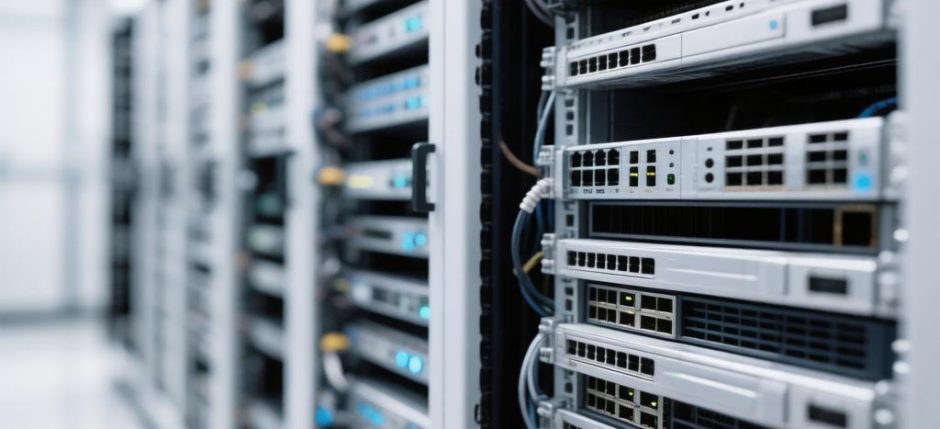
Much of the internet’s server infrastructure is housed in specialized facilities called data centers. A data center can contain thousands of servers arranged in racks, along with the equipment required to keep them connected, powered, cooled, and protected.
Typical data center infrastructure includes:
- Server racks containing computers that run websites, applications, databases, and cloud services;
- Cooling systems that remove heat generated by large amounts of computing equipment;
- Backup power such as batteries and generators to keep systems running during power failures;
- Network equipment that connects servers to other data centers and internet providers;
- Physical security such as controlled access, surveillance, and on-site monitoring.
A useful overview of this infrastructure is available in Cloudflare’s explanation of how data centers work.
Servers are not found only in large commercial data centers. Companies, universities, government agencies, and other organizations can also operate their own server rooms or private facilities.
Major internet and cloud infrastructure is spread across many regions. For example, Amazon Web Services operates cloud regions in locations including Northern Virginia, Frankfurt, London, Ireland, Singapore, Tokyo, Sydney, and São Paulo. Its global infrastructure documentation currently lists dozens of regions around the world.
These locations are examples rather than a complete map of the internet. Countless other data centers are operated by hosting companies, telecommunications providers, corporations, governments, and cloud platforms.
Is There a Main Server That Controls the Internet?
No. The internet does not have one main server, control room, or storage facility.
It is a decentralized network of independently operated networks that communicate with one another using common technical standards. If one data center shuts down, the entire internet does not disappear because websites and services are distributed across many separate systems.
One source of confusion is the DNS root server system. DNS helps computers locate online resources by connecting human-readable domain names with the addressing system used by networks.
There are 13 logical root server identities, but this does not mean the internet runs on 13 physical computers. According to ICANN’s description of the root server system, 12 independent operators manage those 13 identities through more than 1,500 individual server instances located around the world.
Those root servers also do not store the pages, images, videos, or databases of every website. Their role is part of the domain-name system that helps requests find the appropriate destination.
How Do Servers Deliver Websites Around the World?
Suppose someone in the United States opens a website whose main server is hosted in Germany.
- The browser requests the website’s domain name.
- DNS helps determine the network address where the site or an appropriate copy of its content can be reached.
- The request travels through interconnected networks toward the server.
- The server processes the request and sends back the files or data required to display the page.
In practice, large websites often make this process more complicated because they use multiple servers and Content Delivery Networks (CDNs).
A CDN operates servers in many geographic locations. Instead of sending every visitor all the way to the website’s main server, the network can serve cached content from a location closer to the user. This can reduce loading times and the workload on the main infrastructure.
The origin server is the primary source for a website’s content or application data. An edge server is a server closer to users that can deliver cached copies of files such as images, scripts, video, or web pages.
Because of this setup, asking where a website is “stored” does not always produce one answer. Its application, database, backups, and cached content may exist in different data centers or countries.
How Can You Find Where a Website’s Server Is Located?
You can estimate the location of a website’s server by first finding its IP address and then checking information associated with that address.
- Run a DNS lookup. On many computers, you can use a command such as
nslookup example.com. - Copy the IP address returned by the lookup.
- Enter the address into an IP geolocation or network lookup service.
- Review the listed country, region, network operator, or hosting provider.
This method has important limitations. An IP address may belong to a CDN, reverse proxy, cloud provider, or other intermediary rather than the website’s original server.
IP geolocation is also approximate. It may identify a country, metropolitan area, or hosting network without revealing the actual physical building where the hardware is installed.
For example, a website may appear to be served from a U.S. IP address because you are connecting to a nearby CDN edge server even though its primary database is hosted in Europe. Large services can also automatically direct different users to different data centers.
So there is no single place where “the internet” is stored. Websites and online services run on physical servers distributed through data centers and other facilities worldwide, connected by telecommunications networks that allow users to reach them from almost anywhere.